Menu

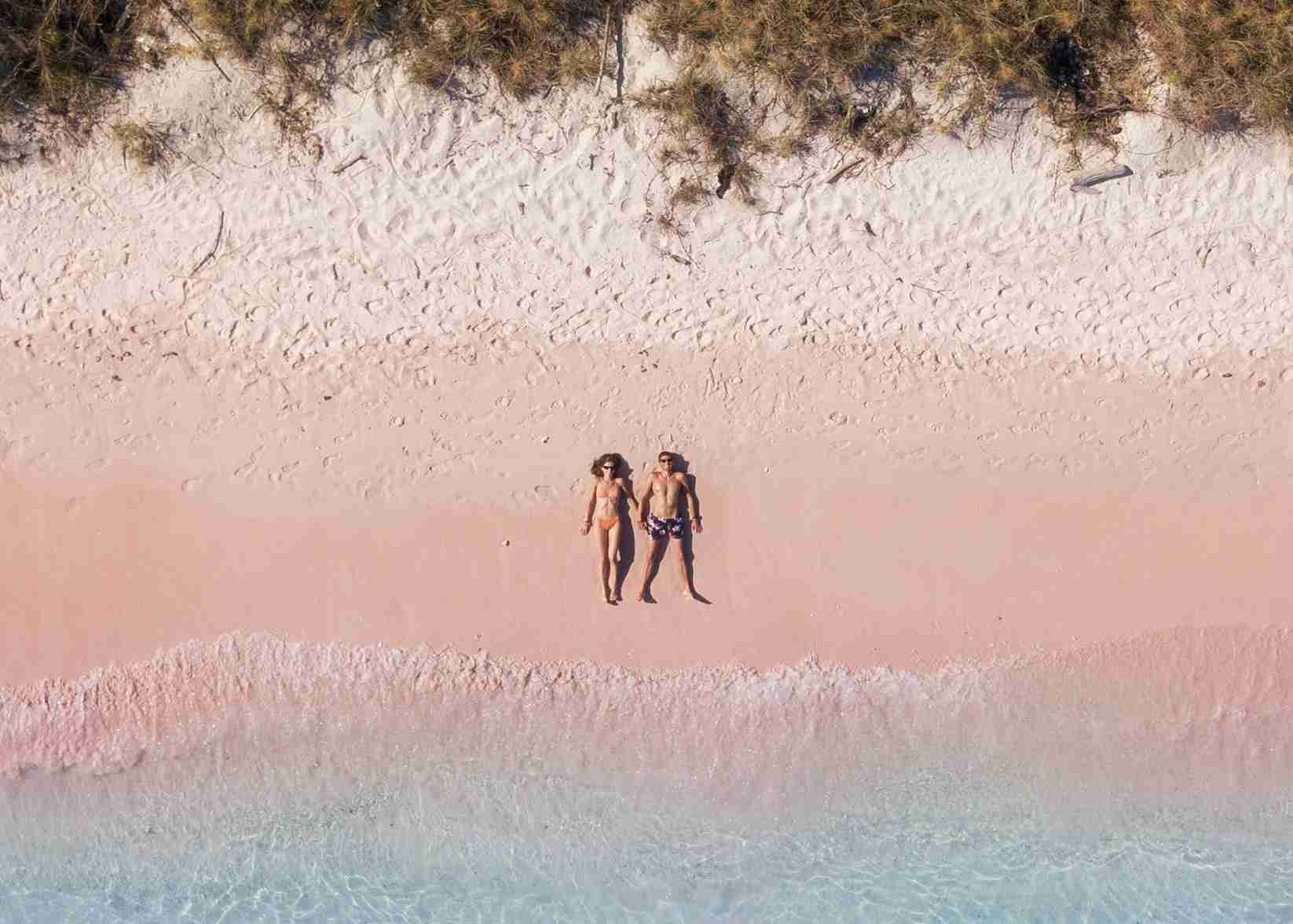
Pantai Merah — Indonesia’s rarest beach, where red coral fragments mix with white sand to create a blush-coloured shoreline.
Pink Beach — locally known as Pantai Merah — is one of only seven pink sand beaches on Earth. The distinctive rose hue comes from microscopic fragments of red coral (Foraminifera) mixed with white sand. The blush intensifies when the sand is wet.
The beach stretches ~200 m along a sheltered bay, backed by dramatic volcanic hills. Water visibility regularly exceeds 15 m, and the coral reef begins just metres from shore — making it one of the most accessible snorkelling locations in Komodo National Park.
Consistently rated among the best shore-entry snorkelling in Indonesia.
Shallow 1–5 m depth near shore, calm sheltered bay — ideal for beginners and children, still exciting for experienced snorkellers.
Dense populations of clownfish in anemones, parrotfish, butterflyfish, angelfish, and occasional reef sharks patrolling the deeper edges.
Enter from the beach and drift slowly to the right (south) where the coral is most dense and diverse.
Pink Beach is accessible only by boat from Labuan Bajo — approximately 2.5 hours by standard boat or 1 hour by speedboat. Most Komodo day trips include Pink Beach as a standard stop.
For the best experience — arriving before crowds and staying long enough to fully enjoy snorkelling — private tours and luxury liveaboard cruises offer significant advantages over group tours that typically allow only 30–45 minutes at the beach.
The pink is most visible when conditions cooperate — here’s how to capture it.
Photograph along the waterline where waves have recently receded — the pink intensifies.
Overcast skies and golden-hour light enhance pink tones; harsh midday sun washes them out.
Underwater camera or waterproof phone case captures vivid coral and fish just below the surface.
Aerial shots reveal the contrast between pink sand, turquoise water, and volcanic green hillsides.
Sand composition, activities, access, and sustainability — expand any section.
The hue results from microscopic red coral fragments and magnetite minerals mixed with white sand granules. Foraminifera shells (tiny marine organisms) contribute ~40–50% of the visible pink pigmentation. Beach composition varies seasonally — high-energy wave seasons (June–August) expose deeper pink-tinted sand layers; lower-energy periods (November–March) accumulate lighter surface layers. Pink intensity reaches maximum in late afternoon (3–5 PM) when sun angles enhance saturation. The beach measures ~500 m, with the deepest pink concentrated in the southern 250-m section adjacent to shallow snorkelling zones.
Snorkelling in 2–4 m shallow zones immediately offshore provides coral garden observation and tropical fish viewing for all levels. Swimming in the protected lagoon offers 28–30°C water year-round with 5–8 m visibility. Sunset photography sessions (departing 4:30 PM, returning 6:30 PM) capture optimal lighting with minimal crowds (peak congestion 10 AM–1 PM). Private beach picnics (USD 200–400) and sunset champagne service enhance romantic occasions. Underwater photography workshops (USD 300–400) teach composition for pink-sand and reef shots.
Standard speedboat tours depart Labuan Bajo 8–9 AM with 30–40 minute transit. Boat tours typically include 3–4 hours beach time (snorkel + swim + lunch). Full-day tours bundling Pink Beach, Manta Point, and Padar cost USD 65–100/person in groups of 8–20. Private speedboat charters (USD 400–600/day) accommodate 4–8 passengers with flexible scheduling and off-peak access. Luxury catamaran options (USD 150–200/person/day) provide enhanced comfort, larger decks, and premium meal service.
Visitor impact management includes designated landing zones and a ~300–400 daily visitor cap to prevent erosion. Coral protection zones establish 20–30 m no-anchoring perimeters around offshore reefs. Waste management requires zero-tolerance litter removal; violations carry USD 500–1,000 operator fines. UNESCO recognition provides regulatory framework for sustainable management. Luxury operators contributing 10–15% of revenue (~USD 50,000–100,000 annually from major operators) fund beach restoration and environmental education benefiting local communities.
Quick practical answers about Pink Beach.
Pink Beach (Pantai Merah) is on the eastern coast of Komodo Island within Komodo National Park. Approximately 2.5 hours by standard boat or 1 hour by speedboat from Labuan Bajo. Accessible only by sea.
The pink comes from microscopic fragments of red-pigmented coral organisms (Foraminifera). These tiny red coral pieces mix with white sand to create the distinctive rose-blush colour. The pink intensifies when the sand is wet.
Yes — Pink Beach has calm, clear water that is excellent for swimming and snorkelling. The sheltered bay provides gentle conditions suitable for all swimming abilities. The coral reef starts just metres from shore.
Yes — Pink Beach is included in virtually all Komodo National Park day trips and liveaboard itineraries. It is one of the four essential stops alongside Padar Island, Komodo or Rinca dragon treks, and Manta Point snorkelling.
Other Komodo highlights typically visited on the same itinerary.
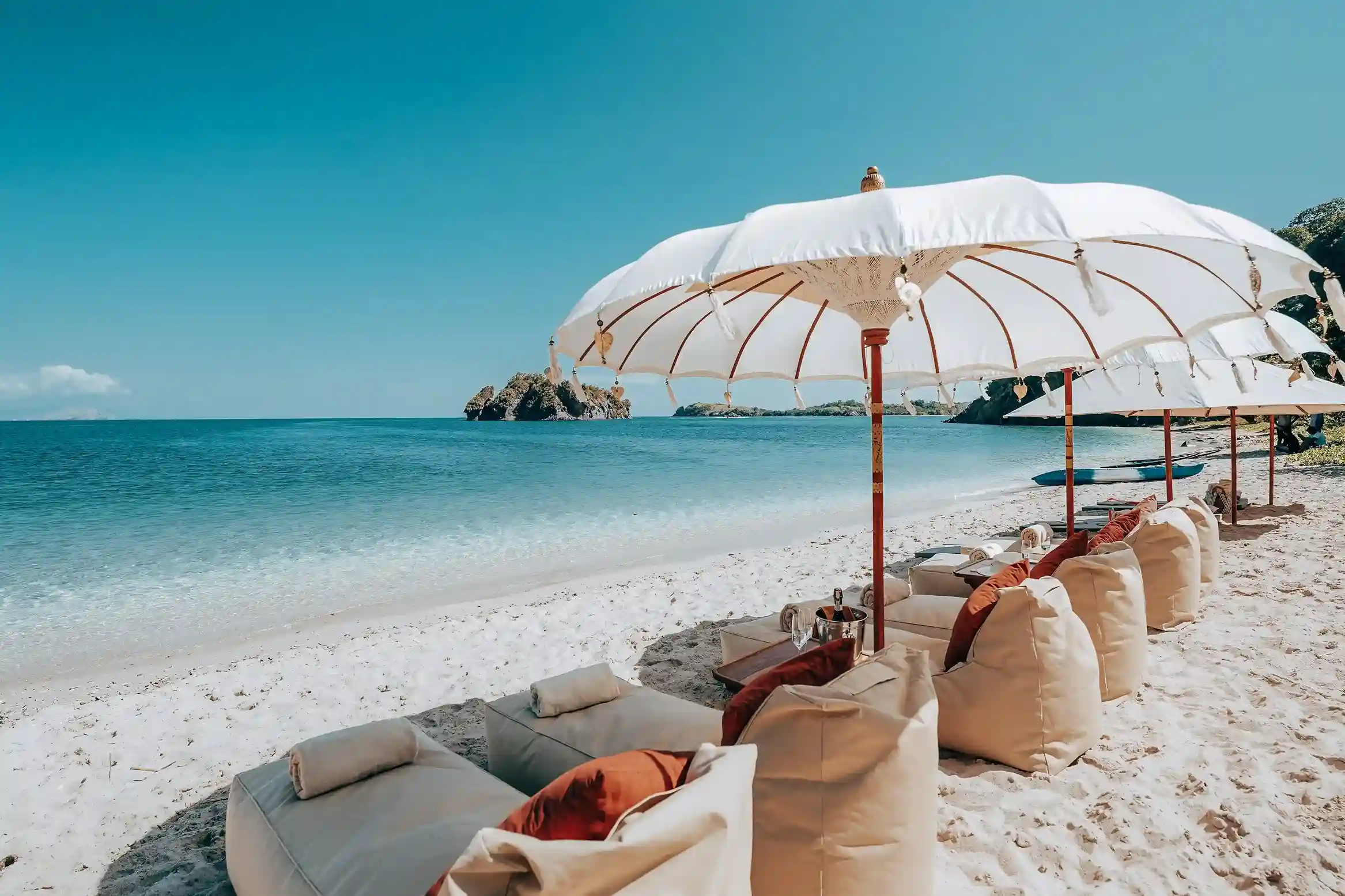
Tell us your dates and group size — we’ll match you to a private vessel and a route that arrives at Pink Beach before the crowds.
Last updated: May 2026