Menu

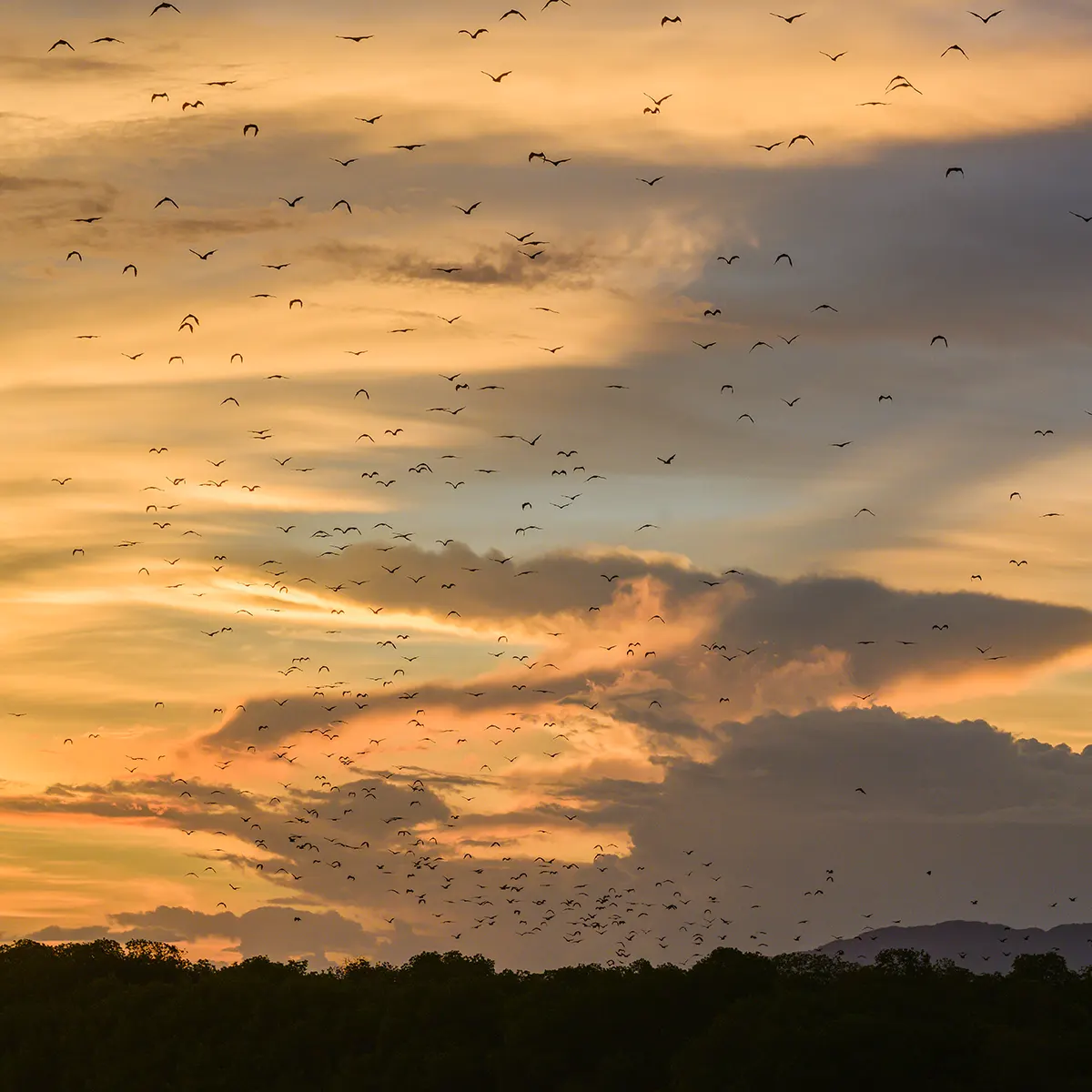
Every sunset, tens of thousands of giant fruit bats emerge from the mangroves and stream across the sky — one of Labuan Bajo’s most unforgettable wildlife moments.
Kalong Island (Pulau Kalong, literally “Bat Island”) is a small mangrove-covered island ~30 minutes by boat from Labuan Bajo. Every evening at sunset, tens of thousands of Pteropus vampyrus — giant flying foxes with wingspans up to 1.5 metres — emerge from the canopy and stream across the sky in a continuous flight that can last over an hour.
The bats spend daylight hanging from mangrove branches in dense clusters, becoming active as sunset approaches and departing en masse to feed on fruit and nectar across the surrounding islands throughout the night.
The bat exodus happens every evening year-round. The spectacle begins ~15–30 minutes before sunset and continues 30–60 minutes after. Boats anchor offshore at a respectful distance — no landing on the island (landing would disturb the colony).
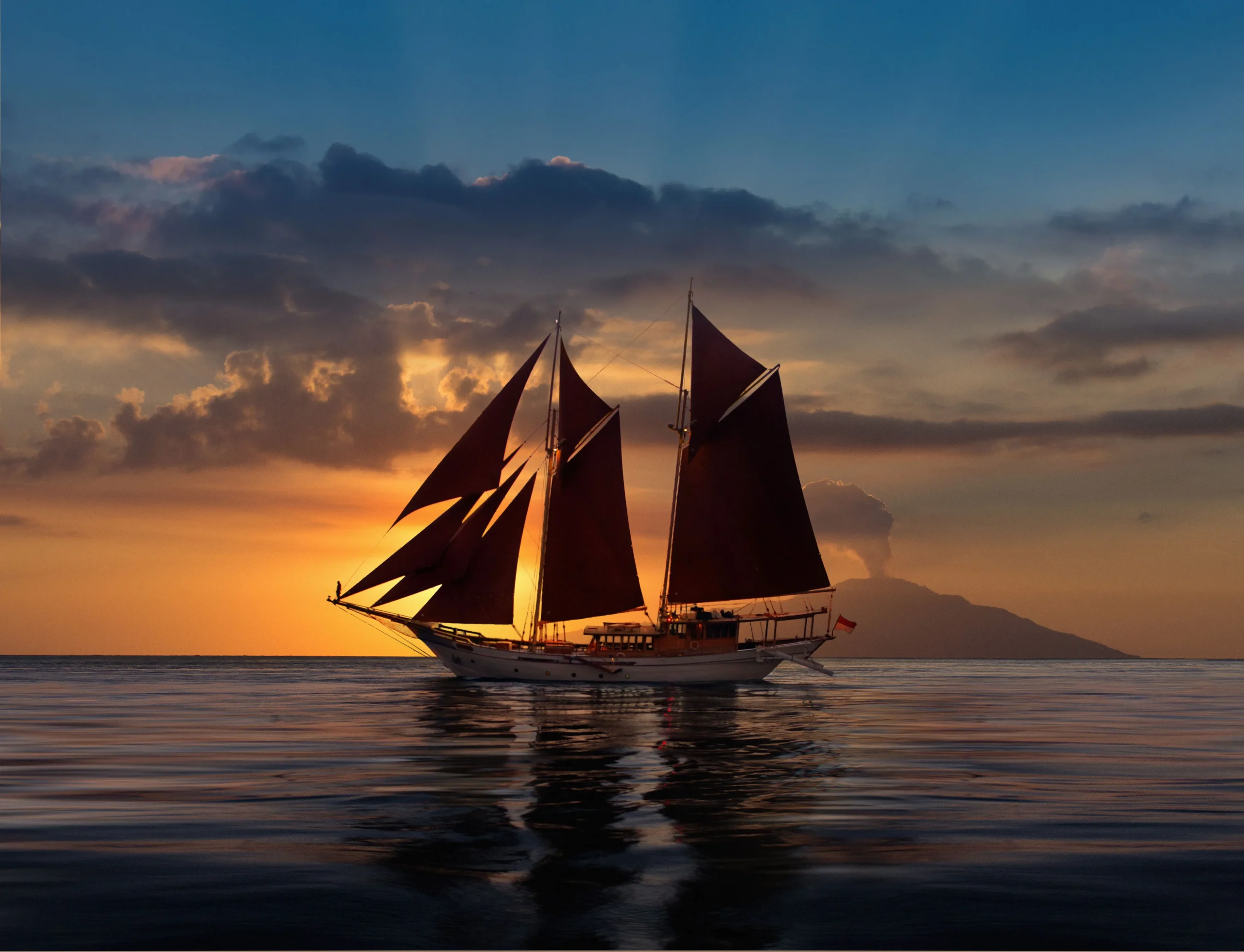
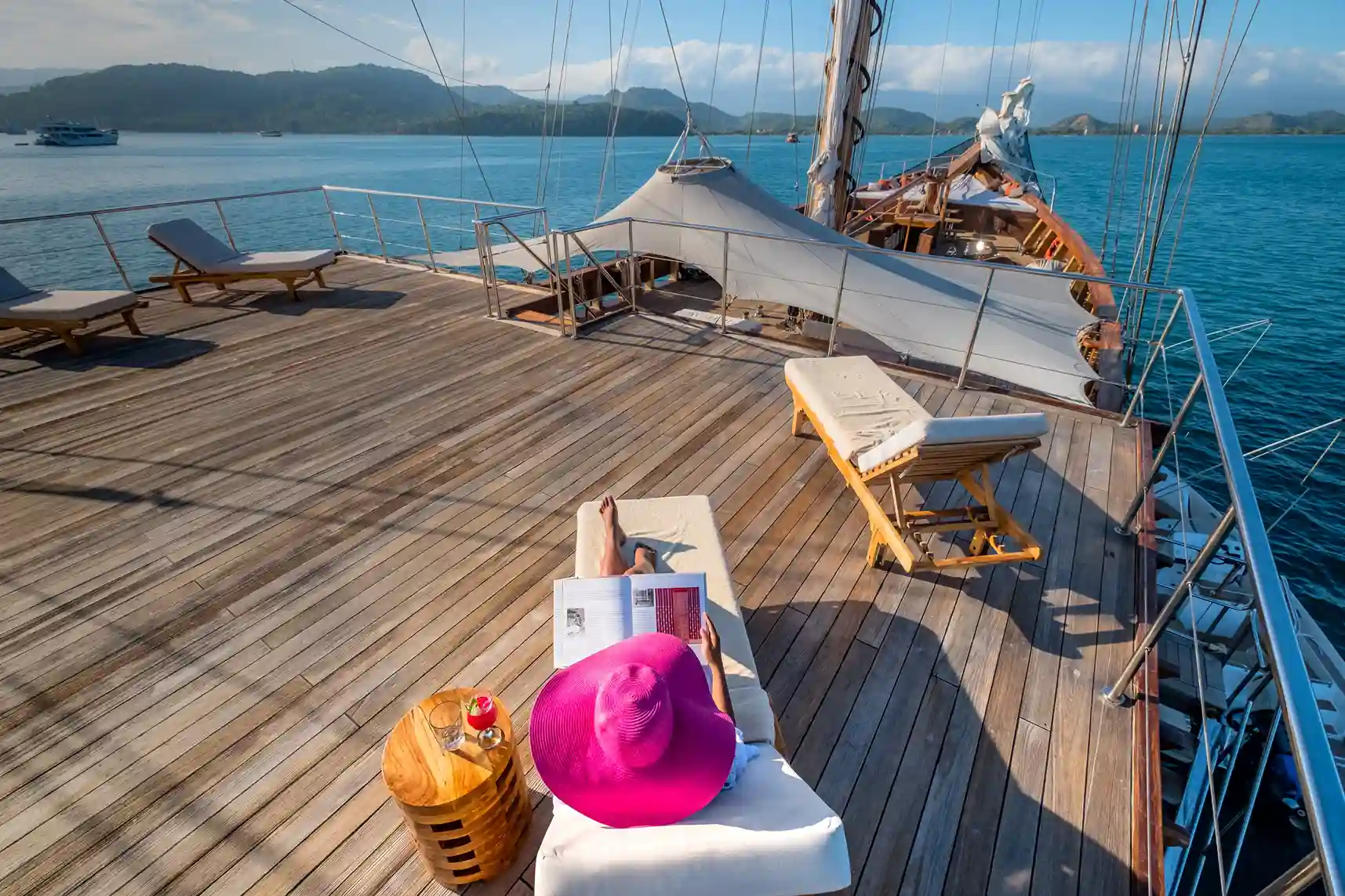
Kalong is commonly included as a sunset activity on Komodo day-trip returns, or as the first evening stop on multi-day luxury cruises. Dedicated sunset cruises combine Kalong bat viewing with cocktails and dinner aboard a luxury phinisi.
Four techniques to capture the bat spectacle in its full drama.
Freezes individual bat silhouettes against the sunset sky.
Creates artistic blur showing the flow of thousands of bats in motion.
Captures individual bat detail and tight crops.
Captures the full spectacle with sunset context. Burst mode increases keeper rate.
Timing, colony size, boat types, photography gear, secondary activities, and safety.
Flying foxes emerge at dusk, with peak exit activity 30xe2x80x9345 minutes before sunset. Optimal viewing is the 15xe2x80x9320 minute window immediately following major exodus when thousands of bats fill the sky in dramatic silhouette. Tours typically depart Labuan Bajo 2xe2x80x933 hours before sunset, arriving 60xe2x80x9390 minutes before emergence. Evening lighting creates exceptional photography opportunities. Night dives at the island can occur after viewing, extending visits to 8xe2x80x9310 hours. Sunrise returns are possible for morning bat returns, though evening departures are far more popular.
Kalong hosts colonies estimated at 15,000xe2x80x9330,000 flying foxes xe2x80x94 one of Indonesia's largest fruit-bat concentrations. These megabats (wingspan up to 1.5 m) consume massive quantities of fruit and nectar nightly, travelling up to 50 km foraging. Population has remained relatively stable for decades. Sighting reliability is ~100% during standard viewing hours. The sheer volume creates dramatic visual spectacle xe2x80x94 thousands simultaneously covering the evening sky in coordinated flight.
Standard group tours operate boats for 15xe2x80x9330 passengers at USD 60xe2x80x9390/person. Speedboats minimise transit (40xe2x80x9350 min each way). Traditional wooden boats provide cultural authenticity at slower pace (60xe2x80x9380 min). Private charters for 4xe2x80x938 guests cost USD 300xe2x80x93500. Luxury yacht options enable sunset viewing from anchored vessel with champagne and gourmet dining (USD 200xe2x80x93400/person). Multi-activity tours combining bat viewing with diving or snorkelling cost USD 150xe2x80x93250/person for 10xe2x80x9312 hour bookings.
Photography requires rapid-fire cameras (7+ fps) and fast lenses (f/2.8 or faster) to capture sharp bats against twilight sky. ISO 1,600xe2x80x933,200 is necessary for adequate exposure. Sunset backlit bats create silhouettes requiring exposure compensation and fast shutter (1/1,000+ sec). Stabilised lenses or tripods minimise boat motion blur. Underwater housings enable water-level perspectives capturing bats against water reflections. Video captures swarm dynamics impossible in stills. Bring wide-angle (16xe2x80x9335 mm) and telephoto (70xe2x80x93200 mm) for compositional flexibility.
Beyond flying foxes, Kalong has limited terrestrial wildlife though occasional monitors and seabirds may be observed. Primary attraction remains bat viewing. Underwater coral and fish populations at nearby sites complement the experience. Night dives at the island after bat viewing reveal nocturnal species xe2x80x94 octopuses, crustaceans, nocturnal fish rarely encountered in daytime (USD 100xe2x80x93150/dive). Some tours include sunset sailing experiences separate from the island. Most visitors dedicate 3xe2x80x934 hours to bat viewing plus 2xe2x80x933 hours for secondary water activities within a full-day package.
Flying foxes are non-aggressive toward humans but should not be touched or approached directly. Bat bites can transmit rabies-like viruses (Hendra, Nipah); vaccination is recommended for frequent visitors to bat habitats but optional for single-visit tourists. Avoid contact with bat faeces or saliva. Seasickness medication is recommended for sensitive travellers on 40xe2x80x9380 min transfers; motion bands and ginger are natural alternatives. Sun protection (SPF 50+, hat, light long sleeves) is essential despite evening timing. Insect repellent prevents mosquito exposure. Life jackets are provided on all boats. Children under 10 should be closely supervised.
Quick practical answers about Kalong Island.
Kalong Island is a small mangrove island near Labuan Bajo where tens of thousands of flying foxes (large fruit bats) roost during the day. Every sunset they emerge in a spectacular mass flight across the sky to feed on surrounding islands xe2x80x94 one of Labuan Bajo's most unique wildlife experiences.
The bat exodus happens every evening year-round, starting 15xe2x80x9330 minutes before sunset. The spectacle lasts 30xe2x80x9360 minutes. Visit timing should be planned around sunset hours. Boats anchor offshore for viewing xe2x80x94 no landing on the island.
Kalong Island is often included as a sunset stop on return trips from Komodo National Park, or as the first evening activity on multi-day cruises. Dedicated sunset cruises from Labuan Bajo also feature Kalong as the primary destination.
Other Komodo destinations and sunset-friendly tour options.
Tell us your dates — we’ll match you to a luxury phinisi or speedboat for the sunset bat exodus, with cocktails and dinner on deck.
Last updated: May 2026