Menu

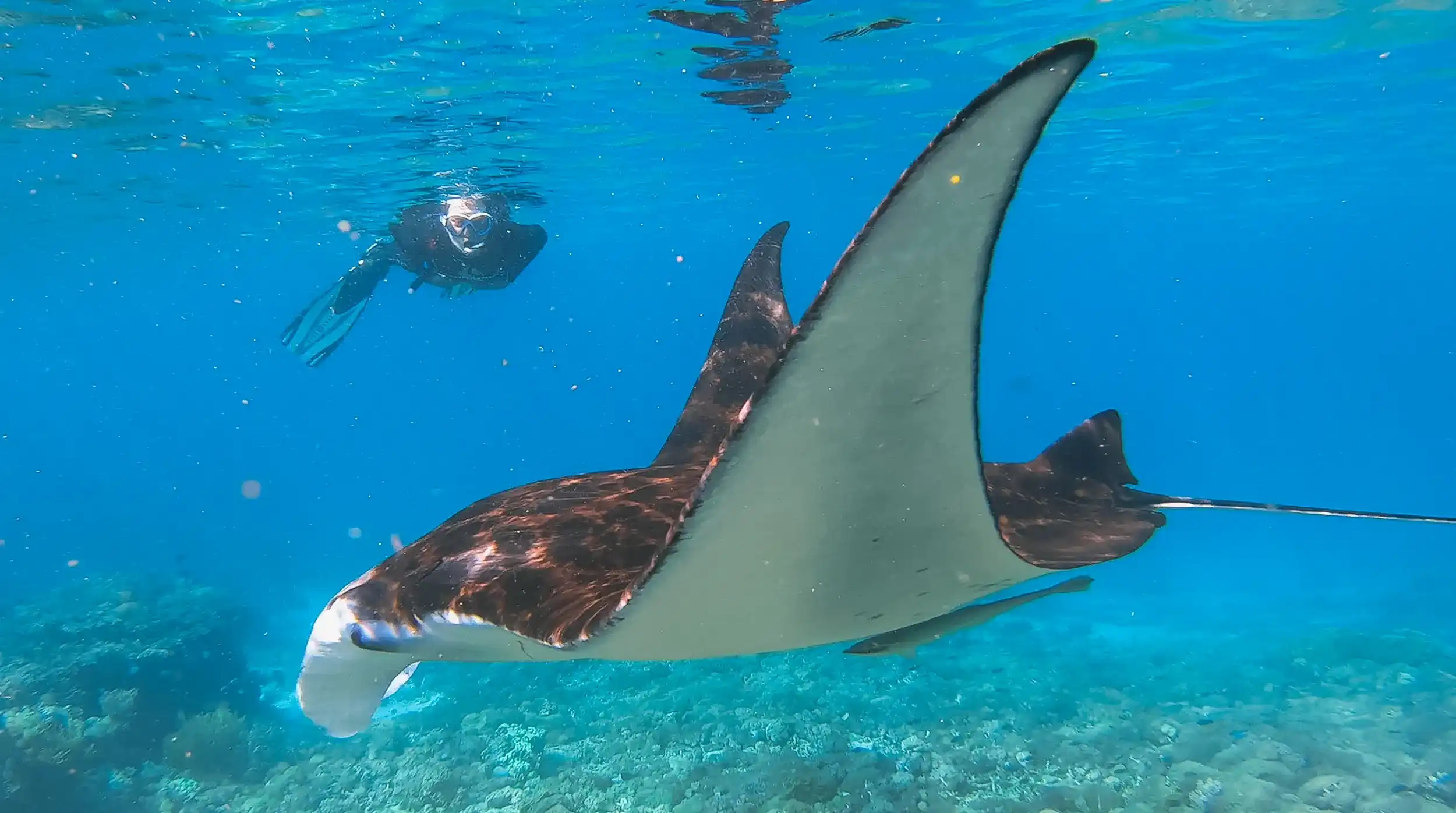
Makassar Reef — one of the world’s most reliable locations to swim with giant oceanic manta rays with wingspans up to 7 metres.
Manta Point (Makassar Reef) near Labuan Bajo attracts manta rays year-round to its nutrient-rich cleaning stations, where these magnificent creatures — wingspans reaching 7 metres — glide gracefully through crystal-clear water. Whether you snorkel on the surface or dive below, a Manta Point experience ranks among the most extraordinary wildlife encounters available anywhere on Earth.
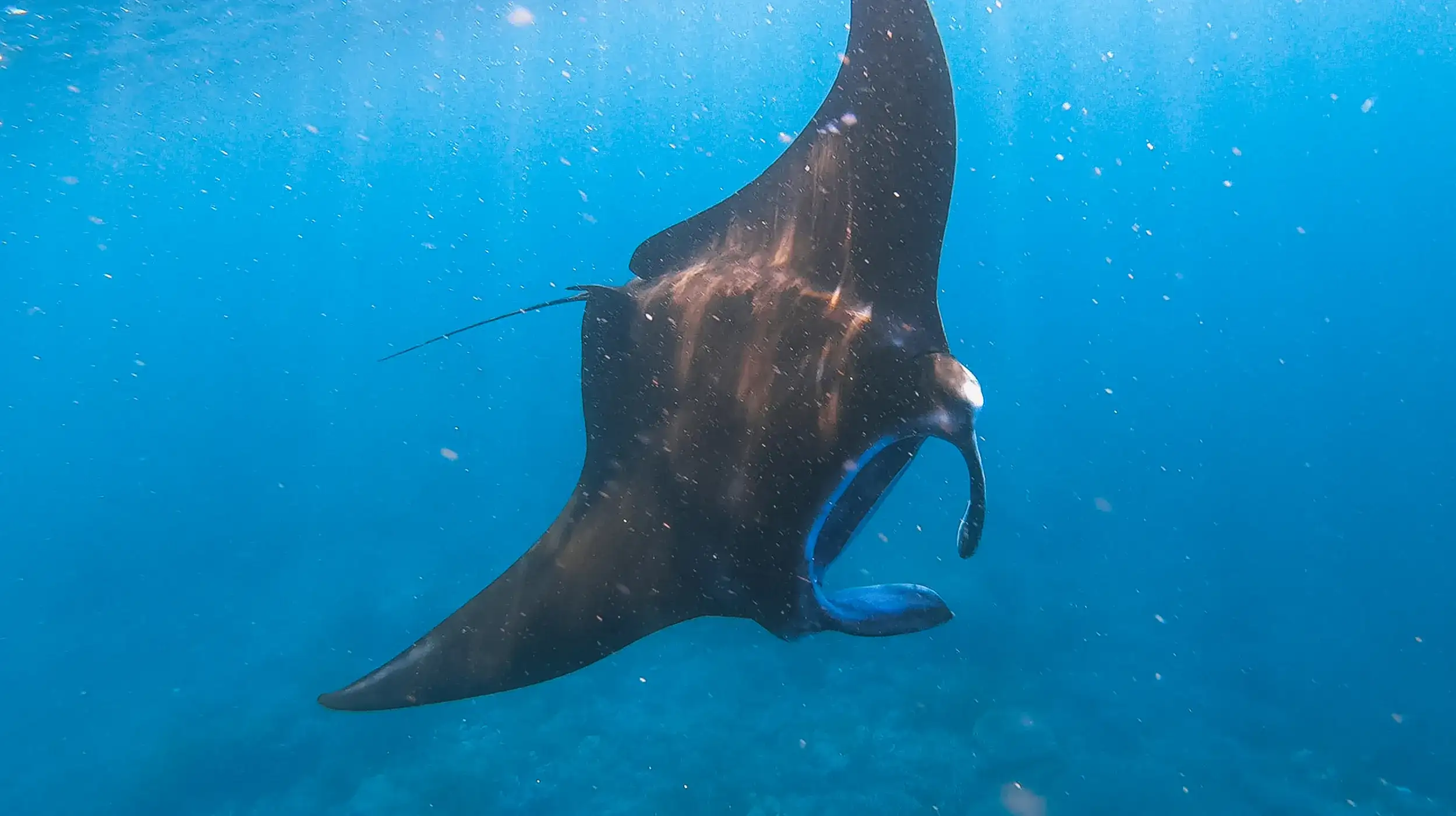
Makassar Reef is a submerged reef system where nutrient-rich currents create a natural feeding and cleaning station for oceanic manta rays. The reef’s topography channels plankton-dense water through narrow passages, attracting mantas to feed and visit cleaning stations where small fish remove parasites from their bodies.
This predictable behaviour makes Manta Point one of the few places globally where manta encounters are virtually guaranteed during peak season.
Mantas frequently feed near the surface — sometimes within arm’s reach. Our luxury snorkelling experience includes:
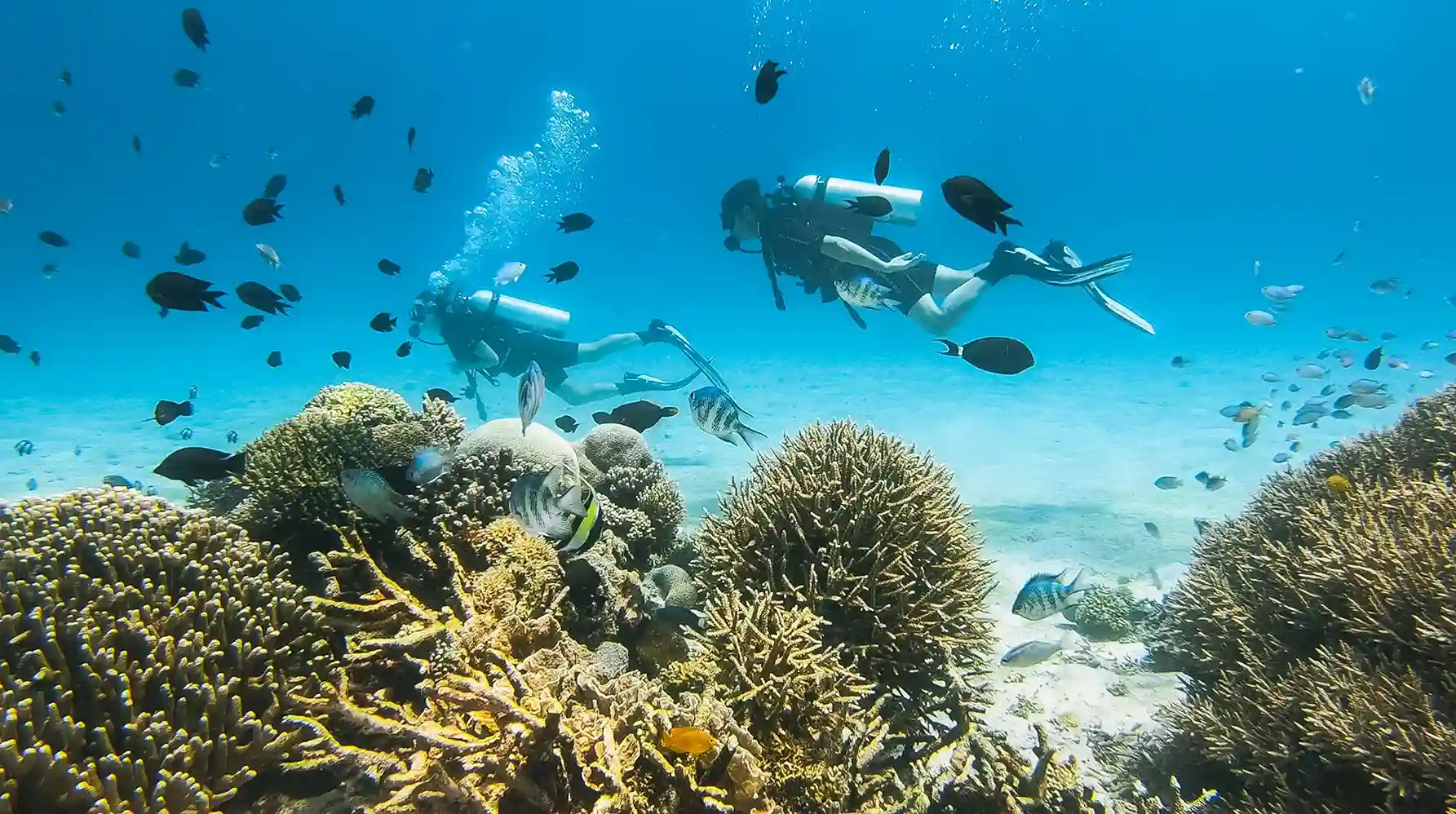
Certified divers enjoy even more intimate encounters at depth. Key dive site details:
Highlights: manta cleaning stations, reef sharks, eagle rays, large pelagic fish. Our dive liveaboard vessels include professional dive masters and full equipment for certified divers.
Mantas present year-round — but conditions and concentrations vary by season.
Highest manta concentrations, best visibility, calm seas.
Good sightings, fewer visitors at the site.
Mantas still present; rougher seas may limit access on some days.
Approximately 2–3 hours south of Labuan Bajo by boat — three popular ways to reach the site.
12 hours, from USD 1,200
Manta-focused luxury day tour — private vessel with extended Manta Point time.
See PackageIncluded in 3D2N / 4D3N
Manta Point is a standard stop in all multi-day packages — multiple dive opportunities.
See PackagePhinisi or Yacht
Custom Manta-focused itinerary with private vessel and crew — flexible scheduling.
See PackageManta rays are classified as Vulnerable by the IUCN. Komodo National Park’s protected status is crucial for their survival.
Site dynamics, environmental triggers, safety, and liveaboard optimisation.
Manta Point, ~18 km north of Labuan Bajo, experiences nutrient-rich upwelling currents (0.5–2 knots) attracting seasonal manta aggregations of 40–100+ individuals during peak season. The site features dramatic topography — shallow reef (5–8 m) adjacent to deep oceanic channels (100+ m) — creating concentrated plankton congregation zones. Manta congregation peaks November–April (peak January–February) with >80% sighting probability under optimal conditions. The shallow reef also hosts coral formations, moray eels, and diverse reef fish for alternative viewing during low manta abundance (May–October). Luxury diving packages cost USD 150–250 per dive; premium multi-dive liveaboard packages USD 6,000–9,000 for 4–7 day voyages.
Plankton blooms triggered by nutrient upwellings concentrate zooplankton resources, attracting mantas via chemoreceptor detection across 50+ km. Current strength correlates with manta density — optimal flows (0.5–1.5 knots) concentrate prey at 5–8 m depths, enabling efficient feeding while maintaining diver visibility. Lunar cycles influence bloom intensity; full moon phases (increased tidal mixing) precede enhanced manta sightings by 3–5 days. Optimal water clarity is 12–25 m visibility; >30 m occasionally shows reduced presence as plankton concentration drops. Real-time monitoring by local operators provides 24–48 hour sighting predictions, improving experience success rates 40–50%.
Strict approach distance enforcement (minimum 2–3 m) prevents ray injury and reduces stress-induced avoidance. Diver positioning protocols require staying below or behind mantas rather than approaching head-on, preserving natural feeding behaviour. Feeding area access restrictions limit diver presence to designated zones. Group size caps (maximum 6–8 divers per guide) ensure supervision and minimise collective disturbance. Guide training programmes (3–6 months) emphasise manta behaviour recognition, stress indicators, and optimal interaction. Insurance coverage (USD 30–60/dive or USD 100–150 for multi-dive policies) addresses rare injury risks.
Extended multi-day itineraries enable multiple daily dive attempts, dramatically improving sighting probability (70–80% vs 40–50% for one-dive day-trip experiences). Dawn dives (5:30–6:30 AM descents) coincide with peak plankton emergence and highest manta feeding activity. Afternoon sessions (3:00–4:30 PM) provide secondary opportunity if morning conditions prove suboptimal. Experienced liveaboard guides maintain real-time current assessment, enabling site substitution when Manta Point conditions deteriorate. Onboard facilities — equipment maintenance, manta biology presentations, photography instruction — enhance the experience beyond dive activities. All-inclusive vessel pricing (USD 6,000–9,000/person for 4–7 days) eliminates ancillary costs.
Quick practical answers about Manta Point.
Yes — mantas feed near the surface, making snorkelling encounters spectacular without dive certification. Our luxury snorkelling experience includes premium gear, an expert guide, and underwater cameras.
May to October for peak concentrations and best visibility. Mantas are present year-round; early morning (before 9 AM) shows the most active feeding behaviour.
Wingspans of 5–7 metres — among the largest rays in the world. Oceanic manta rays are filter feeders that glide gracefully through plankton-rich water.
Completely. Manta rays are gentle filter feeders with no stingers or harmful features. Our guides enforce safe distance (2–3 m minimum) and position you correctly in the mantas' path.
2–3 hours by boat from Labuan Bajo. Manta Point is included in multi-day cruises (3D2N, 4D3N) or available as a dedicated day trip aboard a luxury vessel.
Other Komodo destinations and dive-focused tour options.
Swimming with manta rays is a bucket-list experience. Tell us your dates — we’ll recommend the best vessel and itinerary within 24 hours.
Last updated: May 2026