
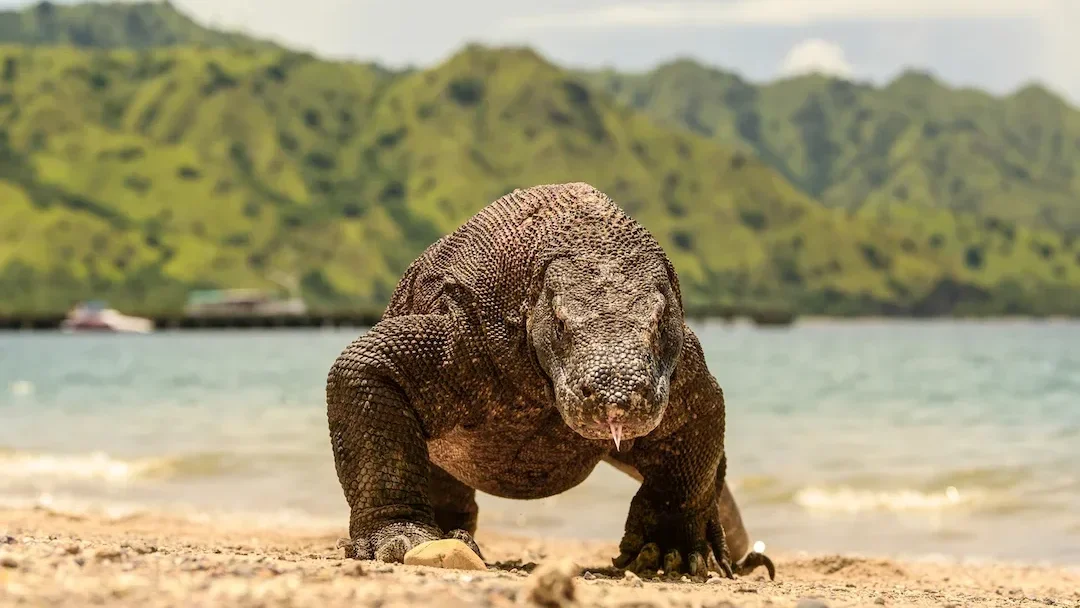

Komodo Dragon Diet — What Do the World’s Largest Lizards Eat?
The Komodo dragon diet reveals a formidable apex predator capable of taking down prey many times its own size. As the world’s largest living lizard, the Komodo dragon (Varanus komodoensis) has evolved an extraordinary combination of stealth, power, venom, and patience that makes it one of Indonesia’s most fascinating predators.
Primary Prey Species
Timor Deer (Rusa timorensis): The primary food source for adult Komodo dragons. These medium-sized deer are abundant throughout Komodo National Park and provide the bulk of nutrition for the dragon population. A single large deer can sustain an adult dragon for weeks.
Water Buffalo (Bubalus bubalis): The largest prey taken by Komodo dragons. While direct kills of healthy adult buffalo are rare, dragons frequently ambush calves, sick, or injured individuals. The combination of bite trauma and venom can eventually bring down even full-grown buffalo, though the process may take days.
Wild Boar (Sus scrofa): Another important prey species. Wild boar are common on both Komodo and Rinca Islands. Their lower profile makes them more vulnerable to the dragon’s ambush hunting style.
Hunting Strategies
Komodo dragons are ambush predators, not pursuit hunters. They lie motionless along game trails for hours, waiting for prey to pass within striking distance. When the moment comes, they explode from concealment with surprising speed — reaching up to 20 km/h in short bursts — delivering a devastating bite to the prey’s leg, belly, or throat.
The combination of 60 serrated teeth (similar to shark dentition), powerful jaw muscles, and venom creates wounds that cause rapid blood loss and physiological shock. Even if prey initially escapes, the dragon follows patiently, sometimes tracking the scent of blood for kilometers until the wounded animal weakens and collapses.
Opportunistic and Diverse Diet
Beyond large mammals, Komodo dragons are highly opportunistic feeders consuming: smaller reptiles (including juvenile Komodo dragons), birds and bird eggs, fish washed up on beaches, carrion (decomposing carcasses are detected from up to 9 kilometers away), invertebrates, and occasionally goats and chickens from nearby villages. Their flexible diet helps sustain the population even when large prey is scarce.
Cannibalistic Behavior
Komodo dragons are known cannibals. Adult dragons will readily eat juvenile dragons, which is why younger animals spend much of their time in trees — a behavior that disappears as they grow too large for arboreal life at around 4-5 years old. Juveniles also roll in feces to make themselves unappealing to adults, a remarkable survival adaptation.
Feeding Mechanics
Komodo dragons swallow food in large chunks rather than chewing. Their loosely articulated skull and expandable throat allow them to consume up to 80% of their body weight in a single meal. A 70 kg dragon can eat over 50 kg of meat in one sitting. After a large meal, they may not need to eat again for several weeks or even months.
Feeding events involving large prey attract multiple dragons. A clear dominance hierarchy determines feeding order, with the largest and most dominant individuals eating first. Smaller dragons must wait their turn or risk aggressive encounters — dragon-on-dragon combat during feeding is not uncommon.
Seasonal Dietary Patterns
Diet varies seasonally with prey availability and dragon activity levels. During the dry season (May-October), deer and buffalo concentrate around remaining water sources, making them more vulnerable to ambush. The breeding season (May-August) sees increased dragon activity and competition for food resources. During wet season, prey disperses more widely, and dragons may rely more heavily on smaller prey and carrion.
Role in the Ecosystem
As apex predators, Komodo dragons play a crucial role in maintaining ecosystem balance within Komodo National Park. By controlling herbivore populations (deer, buffalo), they prevent overgrazing and support vegetation health. Their carrion consumption serves as natural waste disposal, reducing disease risks. The entire food web of the park’s terrestrial ecosystem revolves around this prehistoric predator.
Frequently Asked Questions
What do Komodo dragons eat?
Komodo dragons primarily eat Timor deer, water buffalo, and wild boar. They also consume smaller reptiles, birds, fish, carrion, and occasionally juvenile Komodo dragons. They are opportunistic apex predators capable of eating up to 80% of their body weight in a single meal.
How do Komodo dragons hunt?
Komodo dragons are ambush predators. They lie motionless along game trails waiting for prey, then strike with explosive speed up to 20 km/h. Their serrated teeth and venom cause massive blood loss and shock. If prey escapes, they track it by scent until it collapses from injuries.
Do Komodo dragons eat each other?
Yes, Komodo dragons are cannibalistic. Adult dragons readily eat juveniles, which is why young dragons spend their early years living in trees to avoid being eaten. This cannibalistic behavior is a significant mortality factor for juvenile dragons.
How often do Komodo dragons eat?
After a large meal, a Komodo dragon may not eat again for several weeks or even months. A 70 kg dragon can consume over 50 kg of meat in one sitting, sustaining itself for an extended period between hunts.
Are Komodo dragons apex predators?
Yes, adult Komodo dragons are the apex predators of their island ecosystem with no natural predators. They regulate herbivore populations, consume carrion, and play a critical role in maintaining ecological balance within Komodo National Park.