
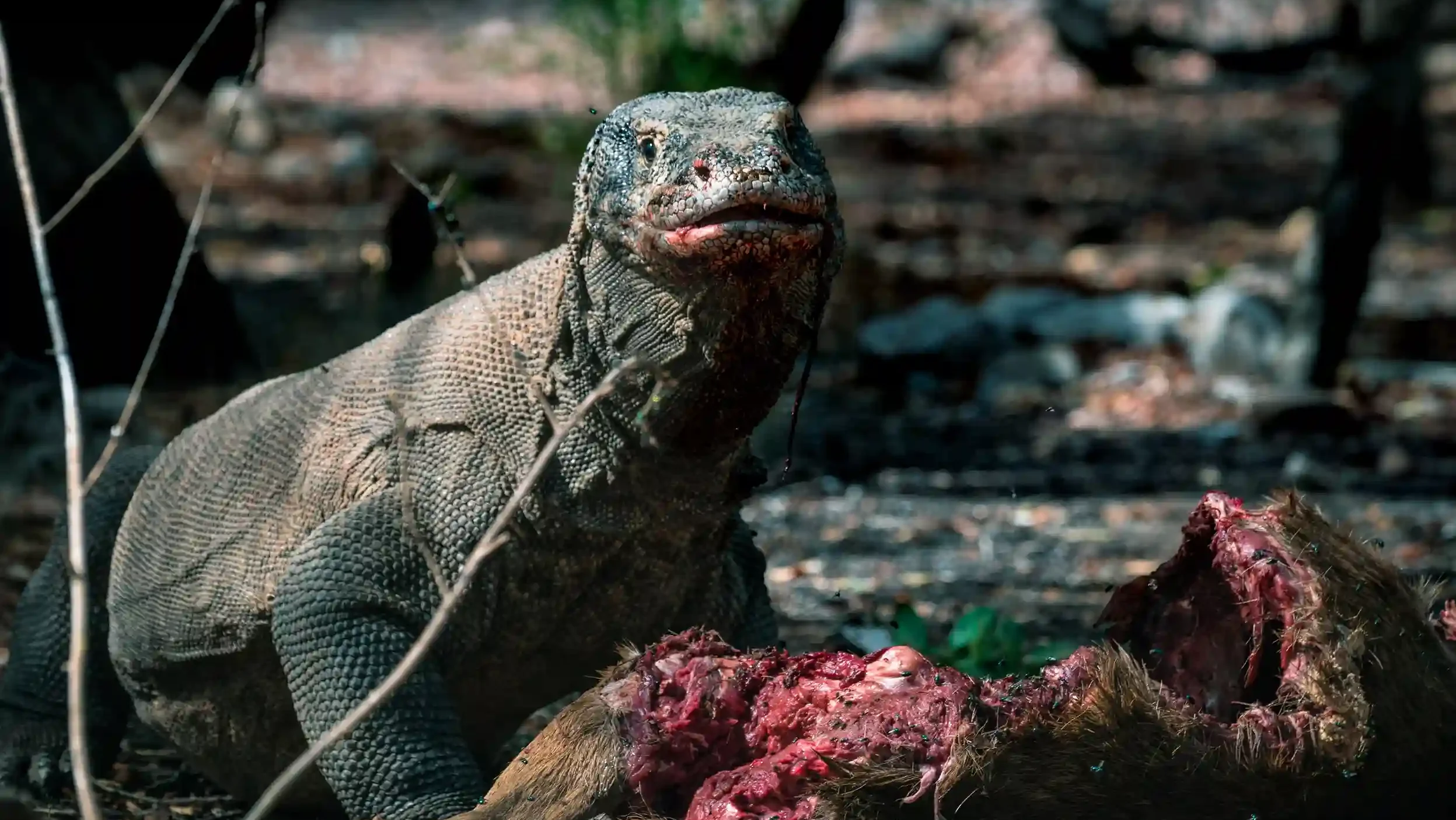

Komodo Dragon Venom — The Science Behind the Deadly Bite
For decades, scientists believed Komodo dragon kills relied on bacteria-laden saliva to cause deadly infections in prey. In 2009, groundbreaking research revealed the truth: Komodo dragons possess genuine venom glands that produce toxic proteins causing rapid blood loss, shock, and tissue destruction. This discovery fundamentally changed our understanding of the world’s largest living lizard.
The Bacteria Myth — Debunked
The traditional explanation held that Komodo dragons harbored deadly bacteria in their mouths, and that a single bite would cause sepsis and death over days or weeks, with the dragon tracking its weakened prey. While Komodo dragon mouths do contain bacteria (as do all predator mouths), research by Bryan Fry at the University of Melbourne demonstrated that bacteria alone cannot explain the rapid physiological collapse observed in bitten prey.
Studies showed that wild Komodo dragon mouths were no more bacterially loaded than those of other carnivores. The bacteria hypothesis, while dramatic and widely popularized, was scientifically insufficient to explain the observed hunting outcomes.
The Venom Discovery
In 2009, Dr. Bryan Fry and colleagues published landmark research in the Proceedings of the National Academy of Sciences (PNAS) revealing that Komodo dragons possess complex venom glands in their lower jaws. Using MRI scans and biochemical analysis, they identified multiple toxic proteins in the venom including anticoagulants (preventing blood clotting), hypotensive agents (causing dramatic blood pressure drops), and compounds that induce shock and inhibit muscle contraction.
The venom is not injected through hollow fangs like a snake. Instead, it seeps between the serrated teeth and enters the wound during the prolonged, tearing bite characteristic of Komodo dragon attacks. The combination of massive physical trauma from the bite plus venom effects creates a devastating one-two punch.
How Komodo Dragon Venom Works
The venom’s primary function is to accelerate prey incapacitation. Key effects include: anticoagulation preventing wound clotting (causing extensive blood loss), vasodilation dropping blood pressure rapidly, shock induction through pain-inducing compounds, and muscle paralysis in the bite area. A large water buffalo bitten by a Komodo dragon can collapse within hours due to the combined effects of physical trauma and venom.
Venom vs Bite Force
Interestingly, Komodo dragons have relatively weak bite force compared to other large predators — approximately 39 Newtons compared to a saltwater crocodile’s 3,700 Newtons. They compensate with serrated, shark-like teeth designed for slashing and tearing, combined with powerful neck muscles that pull backward to create massive wounds. The venom then exploits these open wounds for maximum systemic effect.
Evolutionary Significance
The discovery of Komodo dragon venom challenged the assumption that venom evolved only in smaller reptiles. Fry’s research suggests that venom capability is ancestral to all monitor lizards and may have been present in the common ancestor of snakes and lizards. This finding positioned the Komodo dragon within a much broader evolutionary story of reptilian biochemical warfare.
Implications for Human Safety
While Komodo dragon attacks on humans are rare, the venom discovery underscores why safety protocols in Komodo National Park are so critical. A bite from a Komodo dragon is a genuine medical emergency requiring immediate evacuation and treatment. The anticoagulant properties of the venom mean bites bleed profusely and resist clotting. Park rangers carry first-aid equipment and maintain communication with medical facilities in Labuan Bajo.
Following ranger instructions during guided treks on Rinca and Komodo Islands is non-negotiable. The safe distances and behavioral guidelines exist precisely because these animals are sophisticated predators with multiple weapons systems — not just big lizards.
Frequently Asked Questions
Do Komodo dragons have venom?
Yes, Komodo dragons possess genuine venom glands in their lower jaws that produce toxic proteins including anticoagulants, hypotensive agents, and shock-inducing compounds. This was scientifically confirmed in 2009 research published in PNAS.
Is the Komodo dragon bacteria myth true?
The bacteria theory has been largely debunked. While Komodo dragon mouths contain bacteria like any predator, research showed that bacteria alone cannot explain the rapid collapse of bitten prey. Venom glands producing multiple toxic proteins are now recognized as the primary mechanism.
How does Komodo dragon venom work?
The venom contains anticoagulants that prevent blood clotting, vasodilators that drop blood pressure, and compounds that induce shock and inhibit muscle contraction. Combined with the massive physical trauma from their serrated teeth, these effects can incapacitate large prey like water buffalo within hours.
Can a Komodo dragon bite kill a human?
Yes, a Komodo dragon bite is potentially lethal due to massive tissue damage from serrated teeth combined with venom effects that cause uncontrollable bleeding and shock. Human attacks are rare but constitute medical emergencies requiring immediate treatment.
How did scientists discover Komodo dragon venom?
Dr. Bryan Fry at the University of Melbourne used MRI scans and biochemical analysis of preserved Komodo dragon skulls and tissue samples to identify complex venom glands in the lower jaw and characterize multiple toxic proteins in their secretions.