Menu

Komodo is spectacular year-round, but each month brings distinct weather, sea conditions, marine encounters, crowds, and pricing. Pick your window with confidence.
The best overall months are April, May, September, and October — dry weather, calm seas, excellent diving visibility, fewer crowds than peak July–August, and better pricing. For manta rays visit November through April. For the driest weather and calmest seas, June–September is optimal but busiest.
Calm seas, dry weather, peak visibility. Four sub-windows with distinct trade-offs.
The transition from wet to dry brings excellent conditions with fewer tourists. Seas are calming, visibility improving to 20–25 m, and the landscape is lush green from recent rains. Manta rays are still present at southern sites. Shoulder-season pricing — our top recommendation for discerning travellers seeking quality without crowds.
The most popular months with guaranteed dry weather, calm seas, and the best diving visibility (25–30+ m). European and Australian summer holidays drive high demand — book flights and charters 2–3 months ahead. Sunsets dramatic and clear. Higher prices and more boats at popular sites; private charters mitigate by accessing sites off-peak.
Crowds thin as school holidays end while weather remains excellent. Diving visibility stays high. Early manta season begins at some sites. Pricing returns to shoulder rates. September rivals April–May as the best value-for-conditions month. Highly recommended for couples and small groups seeking exclusivity.
The dry season’s last gasp — generally still pleasant with occasional afternoon showers. Manta ray encounters increase as the season shifts. Some dive sites see reduced visibility from plankton blooms. Pricing is low season — excellent for budget-conscious luxury travellers.
Lush, quiet, peak manta rays, lowest pricing — trade weather uncertainty for value.
Christmas and New Year bring a secondary peak season despite wet weather. Afternoon tropical showers are common but rarely all-day. Manta rays at peak abundance. Mornings often sunny and suitable for activities. Sea conditions can be rougher — larger phinisi handle this well, speedboats less so. Holiday cruises popular — book early.
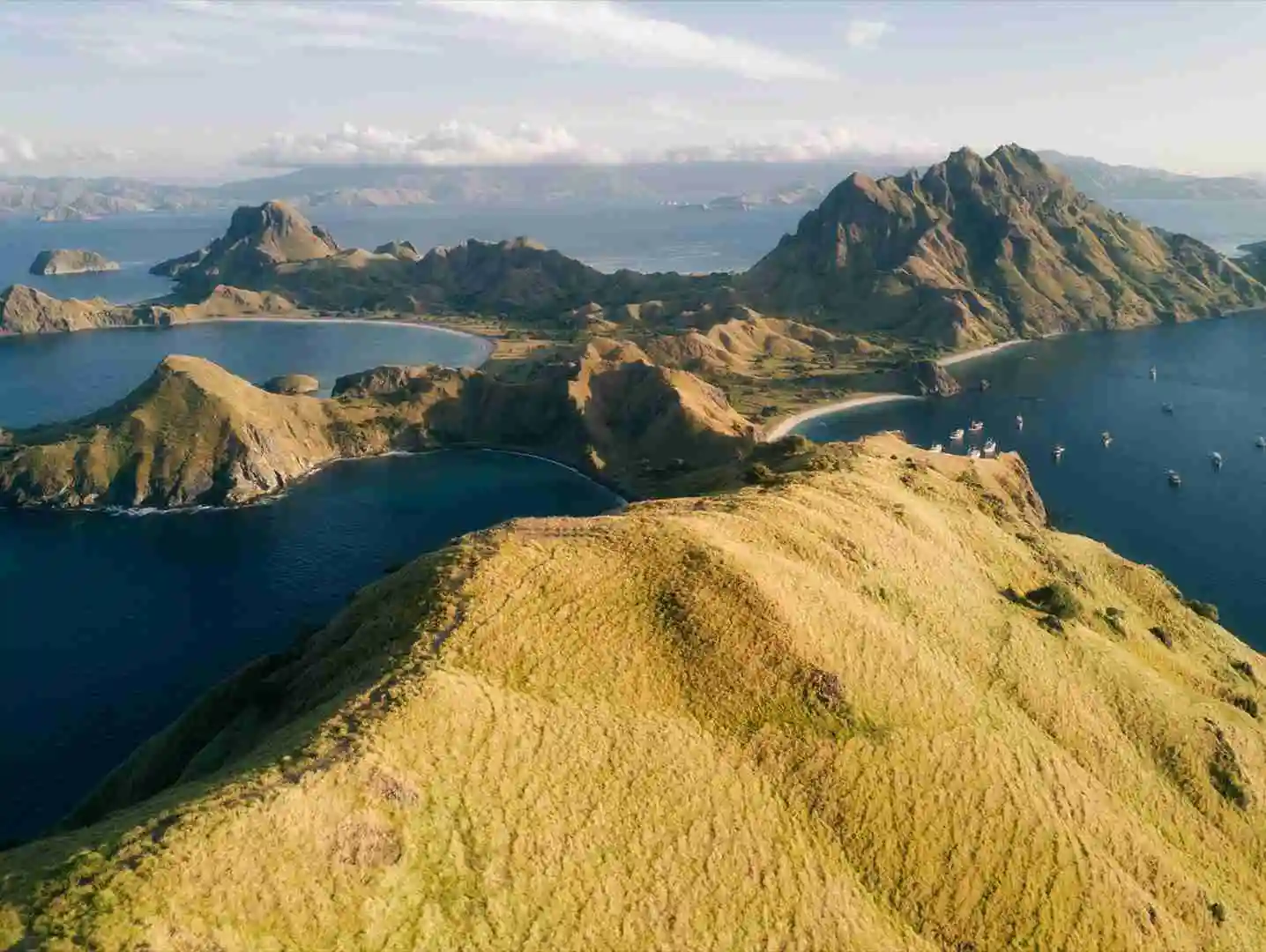
The lowest tourist season with the most rainfall and occasionally rough seas. However, manta ray encounters are excellent, prices are at their lowest, and you may have iconic sites like Padar virtually to yourself. Some operators reduce schedules. Recommended only for flexible travellers comfortable with weather uncertainty.
Twelve one-line snapshots to scan at a glance.
Wet, quiet, great mantas, low prices
Wettest, very quiet, lowest prices
Transitioning, improving conditions
Excellent — sweet spot begins
Excellent — calm seas, green landscape
Peak begins, best visibility
Peak, dry, crowded, premium pricing
Peak, best conditions, highest demand
Golden shoulder, thinning crowds
Shoulder, excellent value
Transition, early mantas
Holiday peak, wet but festive
Pick your priority — we’ll work the timing around it.
June–September (25–30 m)
November–April
April–May & September (best light, conditions, fewer people)
April, May, October, November
Morning year-round; mating displays July–August
June–August (Australian/Asian school holidays)
Quick answers about Komodo timing.
The best time is April to November (dry season), with April–May and September–October as the sweet spot offering excellent weather, fewer crowds, and better pricing. June–August is peak season with the best conditions but highest demand.
Yes. December–March brings afternoon showers but mornings are often sunny. Manta ray encounters are at their best. Prices are lowest. Sea conditions can be rougher, making larger Phinisi vessels preferable over speedboats.
June through September offers the best diving visibility at 25–30+ meters. For manta ray diving specifically, November through April is peak season. Each period offers different but equally exciting underwater encounters.
July and August see the highest visitor numbers. Popular sites like Padar can feel busy during midday when day-trip boats converge. Luxury charter guests avoid crowds by visiting at sunrise before day-trippers arrive.
Tropical year-round: 26–33°C air temperature. Sea temperature 27–29°C. Humidity is high year-round. The dry season (April–November) feels more comfortable with lower humidity and cooling trade winds.
Manta rays are present year-round in Komodo waters, but peak season is November through April when plankton blooms attract large aggregations to southern cleaning stations. Manta Point and Karang Makassar are the premier sites.
The other companion guides for getting here and choosing your vessel.
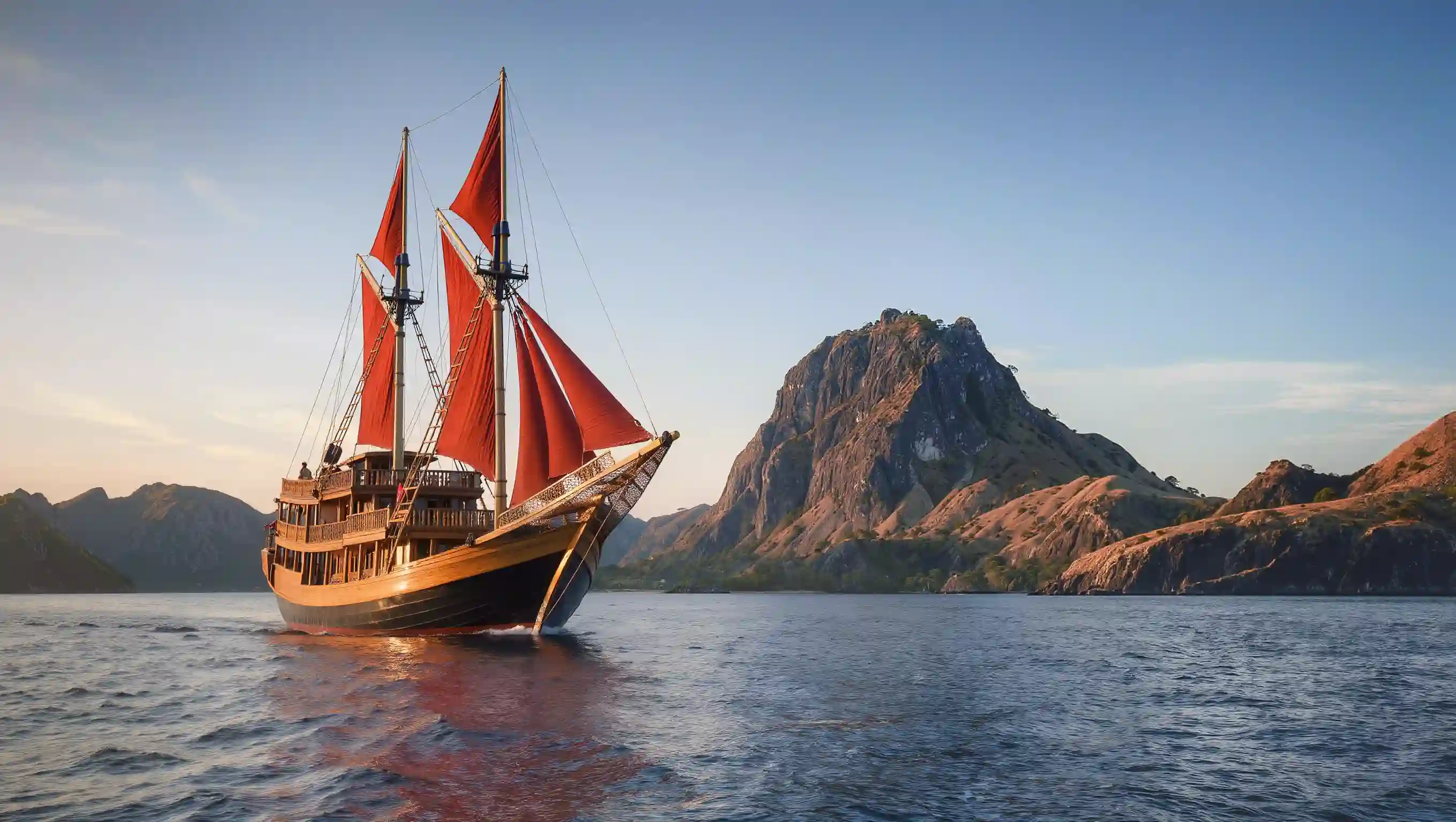
Tell us your priorities — weather, mantas, photography, or budget — and we’ll match you to the right month, vessel, and route before peak availability runs out.
Last updated: May 2026