
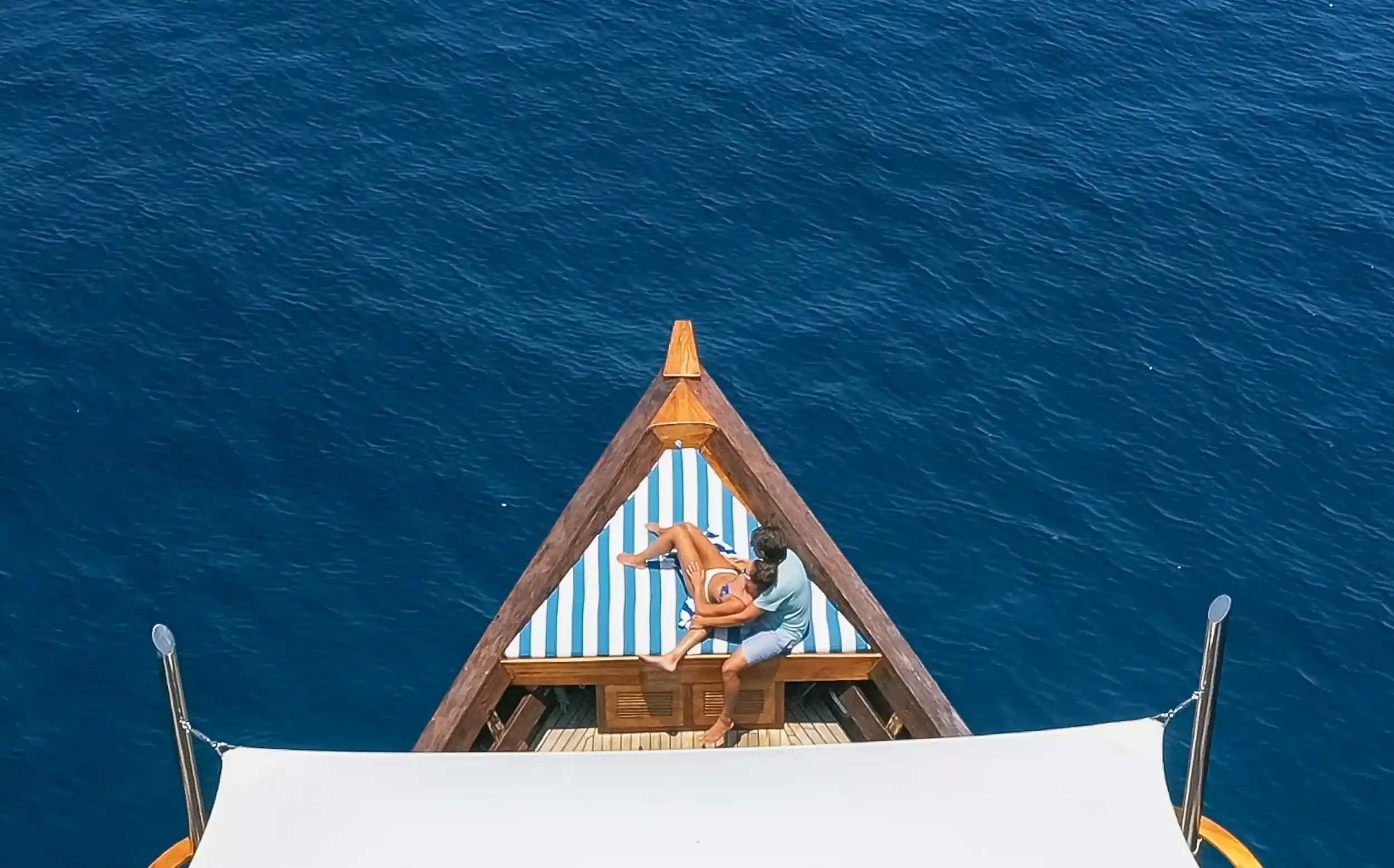
What is a Phinisi Boat? History, Design & Modern Luxury
The Phinisi is more than a boat — it is a living monument to Indonesia’s maritime heritage, a vessel that embodies centuries of seafaring knowledge, master craftsmanship, and the adventurous spirit of the Bugis and Makassar peoples of South Sulawesi. Today, these magnificent wooden sailing ships have been reimagined as some of the world’s most exclusive luxury yachts, carrying guests through the pristine waters of Komodo National Park in a style that no fiberglass superyacht can match.
The Bugis Seafaring Heritage
The Phinisi’s story begins with the Bugis people of South Sulawesi, one of the world’s greatest seafaring cultures. For centuries before European colonization, Bugis sailors navigated vast distances across the Indonesian archipelago, reaching as far as northern Australia, using celestial navigation and intimate knowledge of wind and ocean currents. Their vessels — the Phinisi — became the workhorses of inter-island trade, carrying spices, textiles, and commodities across thousands of kilometers of open ocean.
The name “Phinisi” likely derives from the Dutch word “pinnace,” adopted during the colonial era, though the vessel design predates European contact. Bugis and Makassar shipbuilders developed the Phinisi’s distinctive hull shape through generations of empirical refinement, creating a vessel perfectly adapted to Indonesian waters — stable in open seas yet shallow-drafted enough to navigate coral-fringed coastlines.
Traditional Phinisi Construction
What makes Phinisi construction truly remarkable is the absence of formal blueprints. Master shipbuilders, known as “panrita lopi,” memorize construction techniques passed orally through generations, building vessels of up to 40 meters entirely from memory and experience. The primary timber is ironwood (ulin) — one of the densest, most durable hardwoods in existence — with teak used for decking and superstructure.
Traditional construction begins with the keel laying, followed by the hull planking using a technique where planks are edge-joined with wooden dowels before frames are inserted — the reverse of European shipbuilding methods. This “shell-first” approach creates remarkably strong, flexible hulls that absorb ocean stresses across the entire structure rather than concentrating forces at frame joints.
The building process for a large Phinisi takes 12-18 months and involves dozens of craftsmen. The spiritual dimension is equally important — ceremonies mark key construction stages, and offerings ensure safe voyages. The Bugis relationship between builder, vessel, and sea is one of profound respect and tradition.
The Iconic Phinisi Rig
The Phinisi’s distinctive sail plan features two masts carrying up to seven sails in a configuration unique to Indonesian waters. The forward mast (tiang peniang) carries a large gaff-rigged fore sail plus a triangular topsail, while the mainmast (tiang agung) carries the main sail, topsail, and jib sails. This rig generates excellent power in the moderate trade winds of the Indonesian archipelago while remaining manageable for small crews.
Modern luxury Phinisi vessels retain this iconic profile while adding powerful diesel engines for schedule reliability and precise maneuvering in reef-studded waters. The combination of sail and power gives charter guests the romantic experience of sailing with the practical assurance of engine-assisted navigation.
Modern Luxury Phinisi Yachts
The transformation of the Phinisi from working cargo vessel to luxury charter yacht represents one of Indonesia’s most successful cultural adaptations. Today’s luxury Phinisi vessels range from 25 to 55+ meters, featuring air-conditioned master and guest cabins with en-suite bathrooms, spacious sun decks with lounging areas, professional kitchens preparing gourmet cuisine, dive platforms and water sports equipment, entertainment systems and WiFi connectivity, and crews of 10-20 including captain, chef, and dive master.
The finest examples blend traditional wooden craftsmanship with contemporary luxury — ironwood and teak interiors, brass fittings, hand-carved details — alongside modern marine electronics, stabilizers, and safety systems. The result is a vessel that feels simultaneously ancient and luxurious, cultural and comfortable.
Why Choose a Phinisi for Your Komodo Cruise
Sailing Komodo aboard a luxury Phinisi offers an experience fundamentally different from conventional yacht charters. The traditional wooden vessel connects you to centuries of maritime heritage. The spacious deck layouts — designed for carrying cargo — translate into generous guest spaces with panoramic ocean views. The shallow draft allows access to secluded anchorages that deeper vessels cannot reach. And the aesthetic beauty of a Phinisi under sail against Komodo’s volcanic islands is simply incomparable.
For those seeking the ultimate Labuan Bajo experience, a private Phinisi charter delivers adventure, luxury, and cultural authenticity in equal measure — a floating luxury hotel that carries you to the world’s most spectacular island landscapes.
Phinisi Building Centers Today
The traditional Phinisi building village of Tana Beru in Bulukumba, South Sulawesi remains the spiritual and practical heart of Phinisi construction. Here, master builders continue the ancient craft, now increasingly building luxury charter vessels alongside traditional cargo ships. Bira, also in Bulukumba, and shipyards in Makassar also contribute to modern Phinisi production. Visiting these building villages offers a fascinating cultural experience and deep appreciation for the craftsmanship aboard your chartered vessel.
Frequently Asked Questions
What is a Phinisi boat?
A Phinisi is a traditional Indonesian wooden sailing vessel originating from the Bugis and Makassar seafaring cultures of South Sulawesi. Characterized by its distinctive two-masted rig with up to seven sails, the Phinisi has been used for inter-island trade across the Indonesian archipelago for centuries.
How big is a Phinisi boat?
Traditional Phinisi boats range from 20 to 40 meters in length. Modern luxury Phinisi yachts are typically 25-50 meters, accommodating 6-16 guests in private cabins. The largest luxury Phinisi vessels exceed 55 meters with multiple decks and premium amenities.
Are Phinisi boats safe?
Modern luxury Phinisi vessels are built to international maritime safety standards while maintaining traditional aesthetics. They carry GPS navigation, life rafts, fire suppression systems, and professional crews. Reputable operators maintain rigorous safety protocols and regular maintenance schedules.
How are Phinisi boats built?
Traditional Phinisi boats are built entirely from ironwood (ulin) and teak using time-honored techniques without blueprints — master builders memorize construction knowledge passed through generations. Modern luxury Phinisi incorporate fiberglass reinforcement and marine-grade engines while preserving the iconic wooden hull design.
What is the difference between a Phinisi and a regular yacht?
A Phinisi offers the romance of traditional wooden sailing heritage combined with modern luxury amenities, while conventional yachts prioritize speed and contemporary design. Phinisi vessels provide a unique cultural experience, exceptional stability in island waters, and an aesthetic authenticity that fiberglass yachts cannot replicate.
Where can I sail on a Phinisi boat?
Phinisi boats primarily sail in Indonesian waters including Komodo National Park, Raja Ampat, the Banda Sea, and throughout the Indonesian archipelago. Labuan Bajo is the most popular departure point for luxury Phinisi charters exploring Komodo waters.