
Flores Island — The Complete Guide to Labuan Bajo’s Stunning Home Island
Flores Island is one of Indonesia’s most spectacular and culturally rich destinations — a volcanic island stretching 360 kilometers across the Lesser Sunda chain, with Labuan Bajo as its western gateway. While most visitors come specifically for Komodo National Park boat trips, Flores itself offers an extraordinary wealth of experiences that rival or exceed many better-known Indonesian destinations. From tri-colored volcanic lakes and ancient cave villages to pristine waterfalls and traditional textile-weaving communities, Flores deserves far more than a transit stop.
This comprehensive guide covers everything you need to know about exploring Flores Island from Labuan Bajo — the must-visit destinations, cultural highlights, adventure activities, practical logistics, and suggested itineraries that transform your Komodo trip into a complete Flores experience. Whether you have 2 extra days or 2 extra weeks, Flores rewards every moment invested.
Understanding Flores Island Geography
Flores sits in eastern Indonesia, part of the East Nusa Tenggara province. The island runs roughly east-west, with Labuan Bajo at the western tip and Larantuka at the eastern end. A single trans-Flores highway connects the major towns: Labuan Bajo, Ruteng, Bajawa, Ende, Moni, Maumere, and Larantuka. The terrain is dramatically mountainous — volcanic peaks rise to over 2,000 meters, deep valleys carve between ridges, and the coastline alternates between sheer cliffs and hidden beaches. This topography creates remarkable biodiversity and distinct microclimates across different regions.
The name Flores comes from the Portuguese Cabo de Flores (Cape of Flowers), given by Portuguese traders who colonized the island in the 16th century. This colonial history, combined with indigenous Manggarai, Ngada, and Lio cultures, creates a cultural unique in Indonesia. Flores is predominantly Catholic — one of the few Catholic-majority regions in Indonesia — which influences its festivals, architecture, and social traditions.
Top Destinations on Flores Island
Kelimutu Tri-Colored Lakes — Flores’ Crown Jewel
The three crater lakes of Mount Kelimutu near the town of Moni are among Indonesia’s most extraordinary natural phenomena. Each lake displays a different color — turquoise, deep blue-green, and dark red-brown — that changes periodically due to volcanic mineral reactions. The sunrise trek to the summit (approximately 30 minutes from the parking area) reveals one of the most otherworldly landscapes on Earth. Kelimutu is sacred to the local Lio people, who believe the lakes are resting places for departed souls.
Reaching Kelimutu from Labuan Bajo requires a drive east through the trans-Flores highway (approximately 10-12 hours by car) or a flight to Ende followed by a 2-hour drive to Moni village. The journey itself passes through stunning landscapes — rice terraces, volcanic ridges, traditional villages, and lush tropical forest.
Cunca Wulang Waterfall — Canyon Adventure Near Labuan Bajo
Just 30 kilometers from Labuan Bajo, Cunca Wulang is a spectacular multi-tiered waterfall set within a narrow limestone canyon. The trek involves wading through waist-deep turquoise pools, scrambling over rocks, and swimming through canyon passages — culminating at a thundering waterfall with a deep swimming pool at its base. This is the most accessible adventure activity from Labuan Bajo and takes approximately 3 to 4 hours round trip including travel time. Best visited during dry season (April through October) when water levels are manageable and the canyon is swimmable.
Wae Rebo Traditional Village — UNESCO Heritage
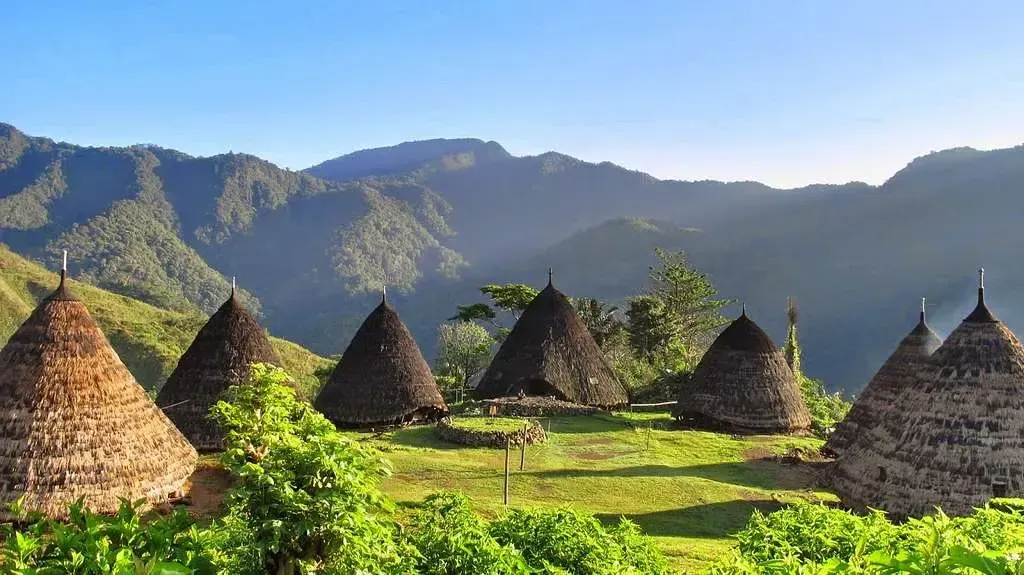
Wae Rebo is an ancient Manggarai village perched at 1,200 meters elevation in the cloud forests of western Flores. The village consists of seven cone-shaped traditional houses (mbaru niang) with thatched roofs reaching up to 15 meters high — a remarkable architectural tradition recognized by UNESCO. Reaching Wae Rebo requires a 3 to 4 hour trek through montane forest from the trailhead village of Denge. Most visitors do an overnight trip, sleeping in the communal houses alongside villagers — an authentic cultural immersion experience unlike anything else in Southeast Asia.
From Labuan Bajo, the drive to the Wae Rebo trailhead takes approximately 4 to 5 hours. The trek itself is moderately challenging — suitable for anyone with reasonable fitness. Spending a night in Wae Rebo, sharing coffee with elders, watching traditional dances, and waking to cloud forest mist is genuinely life-changing for many travelers.
Spider Web Rice Fields of Cancar
Between Labuan Bajo and Ruteng, the Lingko spider web rice fields near Cancar village showcase an ancient Manggarai land division system. Communal rice paddies are divided into wedge-shaped plots radiating from a central point, creating patterns that resemble giant spider webs when viewed from above. This living cultural landscape reflects generations-old systems of communal land management and agricultural tradition. The best viewing point is from a hilltop 2 to 3 hours’ drive east of Labuan Bajo — an easy stop on the way to Ruteng or Wae Rebo.
Bajawa and Ngada Culture
The highland town of Bajawa (approximately 6 hours east of Labuan Bajo) is the cultural heartland of the Ngada people, whose megalithic traditions, ancestral shrines, and living animist-Catholic syncretism create a fascinating cultural experience. Villages like Bena and Gurusina feature stone altars, carved wooden totems (ngadhu and bhaga), and traditional houses arranged around ceremonial plazas. Hot springs near Bajawa add a relaxation element to the cultural exploration.
Ende — Soekarno’s Exile and Black Sand Beaches
The port town of Ende on Flores’ south coast played a pivotal role in Indonesian history — it was the exile location of Indonesia’s first president, Soekarno, from 1934 to 1938. His former residence is now a museum. Ende also features dramatic black volcanic sand beaches, a vibrant traditional market, and serves as the gateway to Kelimutu. The town is deeply atmospheric — a genuine Indonesian small city untouched by mass tourism.
Adventure Activities on Flores
Beyond sightseeing, Flores offers world-class adventure activities. The diving around western Flores — separate from Komodo National Park — includes excellent sites at Batu Gosok and Sabolon reefs. Trekking opportunities range from easy waterfall walks to multi-day volcano ascents. Mountain biking along the trans-Flores highway through rice paddies and villages is an emerging adventure option. Sea kayaking from Labuan Bajo through the island-studded waters provides a unique perspective on the landscape. Caving at Liang Bua — where the famous Homo floresiensis (Flores Man) skeleton was discovered — combines adventure with anthropological significance.
Trans-Flores Road Trip — The Ultimate Overland Adventure
The trans-Flores highway from Labuan Bajo to Maumere or Larantuka is one of Southeast Asia’s great road trips. The full journey takes 3 to 5 days at a comfortable pace, passing through dramatically changing landscapes, cultures, and climates. A suggested routing:
Day 1: Labuan Bajo to Ruteng (4-5 hours) — stop at Spider Web Rice Fields, local coffee plantations, and mountain viewpoints.
Day 2: Ruteng to Bajawa (4-5 hours) — visit Wae Rebo village (add 1 day), explore Ngada villages of Bena and Gurusina, enjoy hot springs.
Day 3: Bajawa to Ende (5-6 hours) — visit Soekarno exile museum, explore Ende’s black sand beaches and traditional market.
Day 4: Ende to Kelimutu/Moni (2 hours) — afternoon arrival, overnight in Moni, pre-dawn Kelimutu sunrise trek.
Day 5: Kelimutu to Maumere (3-4 hours) — visit traditional weaving villages, relax at Maumere beaches, fly out from Maumere airport.
Flores Culture and Traditions
Flores is a cultural mosaic of distinct ethnic groups — Manggarai in the west, Ngada in the central highlands, Lio around Ende and Kelimutu, and Sikka-Krowe near Maumere. Each group maintains unique traditions, languages, textiles, and ceremonies. The ikat textile weaving tradition is particularly renowned — each region produces distinctive patterns and color combinations using natural dyes and hand-operated looms. Purchasing locally made ikat directly from village weavers supports traditional livelihoods and makes a meaningful, authentic souvenir.
Catholicism arrived with the Portuguese in the 16th century and remains dominant, but traditional animist beliefs persist alongside Christian practice. This syncretism produces unique cultural expressions — traditional weddings, harvest ceremonies, and community rituals blend Catholic liturgy with ancestral practices. Visitors who time their trip to coincide with local festivals witness celebrations of extraordinary cultural richness.
Practical Information for Visiting Flores
Getting Around: Rental car with driver is the most comfortable option for exploring Flores (USD 50-80 per day including fuel and driver). Motorbike rental is available in Labuan Bajo and Ruteng (USD 5-8 per day). Public buses connect major towns but are slow, uncomfortable, and infrequent. Domestic flights connect Labuan Bajo, Ende, and Maumere.
Best Time to Visit: April through October offers dry, pleasant weather. July through September is peak season. November through March brings heavy rain, especially in the highlands, making some roads impassable and waterfalls too strong for swimming.
Accommodation: Simple guesthouses and homestays are available in most towns (USD 10-30 per night). Labuan Bajo has the widest range from hostels to luxury resorts. Ruteng, Bajawa, Ende, and Moni offer basic but clean accommodation. Wae Rebo provides unique traditional house overnight stays.
Combining Flores Exploration with Your Komodo Trip
The most rewarding approach is to combine your Komodo National Park experience with at least 2 to 3 days of Flores mainland exploration. Start with a luxury Komodo boat trip from Labuan Bajo, then add overland adventures — Cunca Wulang waterfall, Wae Rebo village, or a longer trans-Flores journey east. This combination delivers both marine and terrestrial wonders, cultural depth, and adventure variety that few destinations anywhere can match. Contact our travel specialists to design a combined Komodo and Flores itinerary tailored to your interests and timeline.
Once you push beyond Labuan Bajo into the wider island, Flores rewards patience with volcanic lakes, weaving villages and traditional cone-roofed hamlets few tourists reach. The catch is distance: point-to-point drives here run several hours over mountain passes with almost no public transport. Choosing Flores overland by private car lets you cover that ground on your own schedule, with a local driver reading the road conditions and suggesting stops the map never mentions. It is the difference between glimpsing the island and genuinely exploring it.
Frequently Asked Questions
How long is Flores Island in Indonesia?
Flores Island stretches approximately 360 kilometers from Labuan Bajo in the west to Larantuka in the east. A complete trans-Flores road trip takes 3 to 5 days at a comfortable pace, passing through dramatically changing landscapes, cultures, and volcanic terrain.
What is the best thing to see on Flores Island?
The top attraction on Flores is Kelimutu tri-colored crater lakes near Moni — three volcanic lakes that display different colors. Other highlights include Wae Rebo traditional village, Cunca Wulang waterfall, Spider Web Rice Fields, and the Ngada cultural villages near Bajawa.
How do I get from Labuan Bajo to Kelimutu?
Drive the trans-Flores highway east through Ruteng, Bajawa, and Ende to Moni village (10-12 hours total). Alternatively, fly from Labuan Bajo to Ende airport, then drive 2 hours to Moni. The sunrise trek from Moni to Kelimutu summit takes approximately 30 minutes.
Is Flores Island worth visiting beyond Komodo?
Absolutely. Flores offers extraordinary experiences that rival or exceed many famous Indonesian destinations — volcanic crater lakes, UNESCO-heritage traditional villages, pristine waterfalls, unique cultural traditions, and dramatic mountain landscapes that most international travelers have never heard of.
How many days should I spend on Flores Island?
For Labuan Bajo area only, add 2-3 extra days for waterfalls and local exploration. For western Flores including Wae Rebo, plan 4-5 days. For the full trans-Flores experience from Labuan Bajo to Kelimutu and Maumere, allow 5-7 days minimum.
What is the best time to visit Flores Island?
April through October offers the best weather with dry conditions and pleasant temperatures. July through September is peak season. Avoid November through March when heavy rains can make highland roads impassable and waterfalls dangerous for swimming.
Is Flores Island safe for tourists?
Yes, Flores is safe for tourists. Locals are welcoming and crime rates are very low. Standard travel precautions apply: secure valuables, drive carefully on mountain roads, stay hydrated in tropical heat, and use reputable guides for trekking and adventure activities.
What is Wae Rebo village and how do I visit it?
Wae Rebo is an ancient Manggarai village at 1,200 meters elevation featuring seven cone-shaped traditional houses recognized by UNESCO. Visit by driving 4-5 hours east from Labuan Bajo to Denge village, then trekking 3-4 hours uphill. Most visitors stay overnight in the communal houses.